
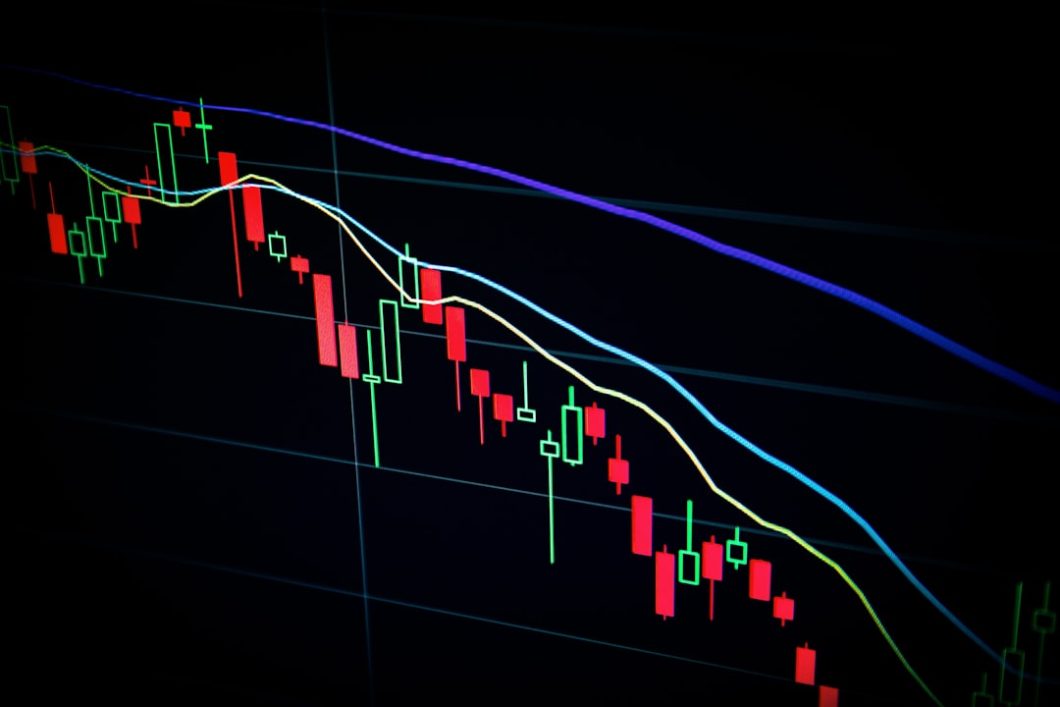
Over 80% of forex volume in major pairs and 60-80% of crypto exchange volume now runs through algorithms, not human traders. This isn’t institutional trivia—it directly affects your fills, spreads, and the market behavior you see on every chart. When EUR/USD suddenly gaps 15 pips on a news release or Bitcoin flash-crashes $2,000 in seconds, you’re witnessing algorithmic systems at work. From the 1970s NYSE automation to today’s microsecond high-frequency trading, the transformation has brought tighter spreads and deeper liquidity alongside new risks like flash crashes and phantom liquidity. This article explains what changed, how it impacts your trading, and what you can do about it.
The Rise of Algorithmic Trading: From DOT Systems to Microsecond Execution
The Early Days: Designated Order Turnaround
When the New York Stock Exchange introduced the Designated Order Turnaround (DOT) system in the 1970s, few traders anticipated it would mark the beginning of a technological revolution that would fundamentally reshape global markets. DOT was remarkably simple by today’s standards—it automated order routing between member firms and specialist posts on the trading floor, eliminating paper tickets and runner delays. Orders that once took minutes to execute could now be processed in seconds. This efficiency breakthrough opened the door to a transformation that would eventually make human-speed trading obsolete in major markets.
Modern Scale: Dominance Across Asset Classes
Today’s algorithmic trading landscape bears little resemblance to those early automated routing systems. Algorithms now command 60-73% of all U.S. equity trading volume, executing thousands of orders per second through high-frequency trading (HFT) strategies that operate in microseconds—one millionth of a second. The dominance extends far beyond equities. In forex markets, algorithmic systems execute over 80% of daily volume in major pairs like EUR/USD and GBP/USD, responding to economic data releases and central bank statements faster than any human trader can process the information.
Cryptocurrency exchanges have rapidly adopted similar infrastructure, with algo trading accounting for 60-80% of volume on major platforms. Modern AI-powered systems analyze millions of data points simultaneously—order book depth, social sentiment, macroeconomic indicators, and cross-market correlations—making trading decisions in milliseconds while human traders are still reading their charts.
The numbers reflect this structural shift: the global algorithmic trading market reached $15.55 billion in 2021 and is projected to double to $31.2 billion by 2030. For retail traders, this isn’t just industry trivia. It means the market you’re trading against is fundamentally different from even a decade ago, with implications for everything from spread behavior to intraday volatility patterns.
How High-Frequency Trading Works: Speed Measured in Microseconds
High-frequency trading firms now execute trades in under one microsecond—one millionth of a second. That’s roughly 1,000 times faster than the blink of an eye. At this velocity, a human trader watching a EUR/USD quote on their screen is already seeing ancient history. The price they observe has likely changed dozens of times between the moment it was transmitted and when their brain processes it.
HFT algorithms don’t just trade fast—they process enormous volumes. A single algorithm can fire off thousands of orders per second, continuously placing and canceling bids and offers across multiple venues. These systems scan order books, identify price discrepancies, and execute trades before traditional participants even register the opportunity. Speed isn’t a competitive advantage in HFT; it’s the entire business model.
The Technology Behind Microsecond Trades
The infrastructure powering HFT resembles a Formula 1 pit crew more than traditional trading. Firms lease co-location space directly inside exchange data centers, placing their servers within feet of matching engines. This proximity shaves precious microseconds off transmission times. They also deploy specialized fiber-optic cables, microwave networks, and even laser technology to reduce latency between trading venues.
Beyond hardware, the software layer runs on custom-built algorithms written in low-level languages like C++ or FPGA (field-programmable gate array) chips that process data at the hardware level. Standard programming languages used by retail traders introduce too much delay. Every nanosecond counts when you’re competing against other HFT firms for the same arbitrage opportunity.
Real-World Example: Cross-Exchange Arbitrage
Consider BTC/USDT trading at $43,250 on Binance and $43,255 on Coinbase. An HFT algorithm detects this five-dollar spread in microseconds, simultaneously buying on Binance and selling on Coinbase. By the time a retail trader notices the discrepancy and places an order, the opportunity has vanished—captured by machines executing thousands of such trades daily. The same mechanics apply to EUR/USD across different liquidity pools, where even fractional pip differences become profitable at sufficient scale and speed.
Major Types of Algorithmic Trading Strategies Retail Traders Encounter
Every time you click buy on EUR/USD at 1.0850 and get filled at 1.0852, you’ve likely encountered a market-making algorithm that beat you to the punch. Understanding the three dominant algorithmic strategies operating in forex and crypto markets helps explain why your orders behave differently than they did five years ago.
Market-Making Algorithms sit on both sides of the order book, continuously quoting bid and ask prices to capture the spread. When you submit a market order for 10,000 units of GBP/USD, these algorithms provide instant liquidity—but at a cost. They profit from the bid-ask differential while managing inventory risk through rapid position turnover. For retail traders, this means:
- Tighter spreads during liquid sessions (often 0.1-0.3 pips on EUR/USD during London hours)
- Wider spreads when volatility spikes, as algos widen quotes to protect against adverse selection
- Occasional “phantom liquidity” where displayed depth vanishes milliseconds before your order arrives
Statistical Arbitrage Algorithms hunt for pricing inefficiencies across exchanges, correlated pairs, or spot versus futures markets. When Bitcoin trades at $43,200 on Binance but $43,260 on Coinbase, stat arb bots pounce within microseconds. For retail traders entering EUR/GBP while the algo simultaneously trades EUR/USD and GBP/USD, the impact shows up as:
- Reduced slippage on highly correlated pairs during normal conditions
- Sudden price convergence that can stop out positions placed too close to market
- Brief periods of unusual spread behavior when correlation breaks down during news events
Trend-Following Algorithms detect momentum breakouts and pile into directional moves, amplifying price action. When USD/JPY breaks above 150.00—a major psychological level—these systems trigger buy orders that can move the market 20-30 pips in seconds. Retail traders face:
- Faster breakout moves with less opportunity to enter at favorable prices
- Increased likelihood of false breakouts as algos trigger stops, then reverse
- Magnified slippage on stop-loss orders placed at obvious technical levels where algo activity concentrates
The common thread: algorithmic dominance means retail execution quality now depends heavily on when and how you enter, not just your analysis being correct.
The Benefits: Tighter Spreads and Deeper Liquidity
Algorithmic trading fundamentally restructured the cost environment for retail traders. In the mid-1990s, a typical EUR/USD spread at a retail broker ranged from 5 to 10 pips. Today, that same pair trades at 0.1 to 0.8 pips during peak liquidity hours. This 90-95% compression in transaction costs didn’t happen by accident—it’s the direct result of algorithms providing continuous two-sided quotes and competing for order flow across multiple liquidity venues simultaneously.
Lower Transaction Costs for Retail Traders
The shift from human market makers to algorithmic liquidity providers reduced bid-ask spreads by 50-70% across major currency pairs since the late 1990s. GBP/USD, which once traded with 8-12 pip spreads at retail brokers, now regularly sees sub-1 pip pricing. In crypto markets, BTC/USD spreads on major exchanges like Coinbase and Binance have compressed from $50-100 in early 2017 to under $5 today, even as absolute price volatility remains elevated. These tighter spreads translate directly into lower entry costs for position traders and dramatically improved profitability thresholds for scalpers and day traders who make dozens of trades per session.
24/7 Liquidity in Forex and Crypto Markets
Algorithmic market makers don’t take lunch breaks or sleep. They maintain continuous bid-ask quotes in major pairs around the clock, ensuring that a retail trader in Sydney can execute EUR/USD at 3 AM local time with the same spread efficiency as a London trader during the European session. Crypto markets benefit even more acutely—algorithmic trading now represents over 80% of volume in major pairs, providing depth that didn’t exist in the thin, manipulation-prone order books of 2015-2016. This constant liquidity means better fill prices, reduced slippage during normal conditions, and the ability to exit positions without moving the market against yourself.
The Risks: Flash Crashes and Liquidity Illusions
Algorithmic trading has introduced a systemic vulnerability that retail traders often discover at the worst possible moment: the flash crash. These events occur when automated systems cascade into panic mode, pulling liquidity from the market faster than human traders can react. What appears as robust market depth on your platform can evaporate in seconds, turning orderly markets into free-fall zones where stop-losses trigger at prices far worse than expected.
The 2010 Flash Crash: A Case Study
On May 6, 2010, the Dow Jones Industrial Average plunged nearly 1,000 points—roughly 9% of its value—in a matter of minutes before rebounding almost as quickly. The catalyst was a $4.1 billion sell order executed by an algorithm that didn’t account for market conditions. High-frequency trading systems detected the selling pressure and began withdrawing bids, creating a liquidity vacuum. Individual stocks traded at absurd prices: Accenture briefly hit one cent per share while Apple shares momentarily spiked to $100,000. Retail traders with stop-loss orders were executed at devastating prices during the chaos, suffering losses that never recovered despite the market’s swift rebound.
The lesson was clear: displayed liquidity is conditional. Algorithmic market makers can pull quotes in milliseconds when volatility exceeds their risk parameters, leaving retail orders to execute against the next available price—which might be nowhere near the last trade.
Modern Flash Crashes in Crypto Markets
Cryptocurrency markets, with their fragmented liquidity and 24/7 trading, have become particularly prone to algo-driven flash crashes. In May 2021, Bitcoin plunged from $42,000 to $30,000 on some exchanges within minutes, triggering over $9 billion in liquidations across leveraged positions. Binance and Kraken both experienced instances where BTC briefly traded below $8,000 during extreme volatility, wiping out stop-losses while the broader market remained significantly higher.
These events aren’t glitches—they’re features of algo-dominated markets under stress. Retail traders face asymmetric risk: algorithms can withdraw liquidity instantaneously, but your stop-loss remains active, waiting to be filled at whatever price the algos decide to offer when they return.
Democratization of Algo Trading: Tools for Retail Traders
Retail traders now have access to algorithmic trading platforms that were once exclusive to institutional desks, and the barrier to entry has collapsed from six-figure budgets to free accounts and modest learning curves.
MetaTrader 4 and 5 dominate the forex automation space through Expert Advisors (EAs)—pre-coded or custom trading bots that execute strategies based on technical indicators. An EA monitoring EUR/USD might automatically open a long position when the 50-period moving average crosses above the 200-period MA, close it at a 50-pip profit target, and enforce a 2% maximum account risk per trade. MT4/5 uses MQL4 and MQL5 programming languages, which resemble simplified C++. Thousands of free and paid EAs exist in marketplaces, though performance claims often outpace reality.
TradingView’s Pine Script offers a lighter entry point. This browser-based scripting language lets traders build custom indicators, backtests, and automated alerts across forex and crypto markets. A Pine Script strategy can scan Bitcoin, Ethereum, and top altcoins for RSI divergence patterns, then send webhook alerts to execute trades through connected exchanges. The syntax is more intuitive than MQL, making it popular among traders who want automation without deep coding knowledge.
For those comfortable with Python, QuantConnect and Alpaca provide institutional-grade backtesting and live execution. QuantConnect supports forex, crypto, and equities with cloud-based infrastructure and historical data spanning decades. Alpaca focuses on commission-free US equities and crypto, offering REST APIs that integrate with Python libraries like pandas and NumPy. A quantitative trader might code a mean-reversion strategy on BTC/USD using Alpaca, testing it against 2020-2024 data before deploying $5,000 in live capital.
| Platform | Markets Supported | Coding Language | Difficulty Level | Cost Structure |
|---|---|---|---|---|
| MetaTrader 4/5 | Forex, CFDs, limited crypto | MQL4/MQL5 | Moderate | Free platform; EA marketplace varies |
| TradingView | Forex, crypto, stocks, futures | Pine Script | Beginner-Moderate | Free tier; Pro plans $12.95-$59.95/mo |
| QuantConnect | Forex, crypto, equities, options | C#, Python | Advanced | Free tier; paid tiers for more backtests |
| Alpaca | US equities, crypto | Python, REST API | Moderate-Advanced | Free trading; data fees apply |
The coding difficulty matters less than strategy logic. A poorly conceived moving average crossover won’t become profitable just because it’s automated on an expensive platform.
Regulation and Market Structure: MiFID II, SEC Rules, and Risk Controls
When a rogue algorithm sent Knight Capital into bankruptcy by executing $7 billion in unwanted trades in 45 minutes back in 2012, regulators worldwide recognized that algo trading demanded new guardrails. Today’s regulatory frameworks directly shape how algorithms interact with your orders, whether you’re trading EUR/USD through a London broker or executing Bitcoin trades on a US exchange.
Key Regulatory Frameworks
Europe’s MiFID II, implemented in 2018, requires all algorithmic trading firms to register with national regulators and implement pre-trade risk controls. These controls include maximum order limits, automated circuit breakers, and real-time monitoring systems that prevent runaway algorithms from destabilizing markets. Firms must test algorithms in simulated environments before deploying them live and maintain detailed audit trails showing exactly what their code executed and why.
The SEC takes a similar stance in US markets, mandating that broker-dealers using algorithms establish risk management controls and supervisory procedures. Kill switches must be readily accessible, allowing firms to instantly halt all algorithmic activity if systems malfunction. These requirements extend to forex brokers operating under CFTC jurisdiction and cryptocurrency exchanges registered as money service businesses.
What This Means for Retail Trader Protections
These regulations create tangible benefits for retail participants. When you place a market order on EUR/GBP, your broker remains legally obligated to provide best execution even when competing against algorithms processing thousands of orders per second. Pre-trade controls reduce the likelihood of flash crashes that once saw the British pound drop 9% in minutes during the 2016 Asian session.
Audit trails mean regulators can investigate suspicious price movements. If a pattern of stop-hunting appears around major support levels in BTC/USD, exchanges must provide records proving whether algorithmic activity contributed. This transparency doesn’t eliminate all manipulation, but it raises the cost and risk for bad actors considerably.
Practical Takeaways: Trading in an Algo-Dominated Market
With algorithms executing over 80% of forex volume in major pairs and dominating crypto order books on exchanges like Binance and Coinbase, retail traders need specific tactical adjustments to survive and profit. The market you’re trading isn’t the same one from five years ago.
1. Stop using market orders during illiquid hours. When you fire a market order on EUR/USD at 22:00 EST or on BTC/USD at 03:00 UTC, you’re feeding directly into algo predatory strategies that widen spreads during thin order book conditions. Use limit orders instead, even if it means missing some entries. A limit order at 1.0852 on EUR/USD protects you from the 2-3 pip slippage that algos engineer during New York-Asia session transitions.
2. Expect spread explosions during news events, even on “tight spread” brokers. Your ECN broker advertising 0.1 pip spreads on EUR/USD will balloon to 8-15 pips in the first 30 seconds of an NFP release. Algorithms withdraw liquidity instantly when volatility spikes. Don’t place stops 10-15 pips away from entry during high-impact releases. Use 25-30 pip stops or avoid trading the initial reaction entirely.
3. Deploy algorithmic tools on your side. MetaTrader 5 Expert Advisors for basic trend-following (moving average crossovers on H4 charts) and TradingView alerts for support/resistance touches let you compete with speed. You don’t need institutional-grade infrastructure. A simple EA that enters long on BTC when the 50-period MA crosses above the 200-period MA on the 4-hour chart removes emotional hesitation.
4. Focus on daily and 4-hour timeframes where pattern recognition matters. Algorithms dominate sub-15-minute scalping, but human traders still find edge identifying head-and-shoulders patterns, divergences on RSI, or Fibonacci retracements on longer timeframes. Your ability to recognize complex chart patterns and synthesize fundamental context remains valuable where speed advantages diminish.
Algorithmic trading transformed forex and crypto markets into faster, cheaper, but more complex environments. The 90% compression in EUR/USD spreads and 24/7 liquidity in Bitcoin markets represent genuine progress for retail traders—you can now enter and exit positions at costs that were unimaginable two decades ago. But this efficiency comes with new risks embedded in market structure itself. Flash crashes, phantom liquidity, and algo-driven stop hunts are permanent features, not temporary bugs.
The playing field isn’t level, but it’s not hopeless either. Institutional algorithms excel at microsecond arbitrage and exploiting thin order books during illiquid sessions. They struggle with pattern recognition on daily charts, fundamental analysis of central bank policy shifts, and the kind of patient position trading that waits for 4:1 risk-reward setups. Your edge as a retail trader lies in timeframes measured in hours and days, not milliseconds. Use limit orders to control execution, avoid trading the first minute of news releases, and consider deploying simple algorithmic tools to remove emotional decision-making from proven strategies.
The algo arms race will continue—quantum computing and machine learning will push speeds and complexity further. But informed retail traders who understand how algorithms behave, adapt their execution tactics, and focus on timeframes where human judgment still matters can find consistent edges. The market changed. Your approach must change with it.