
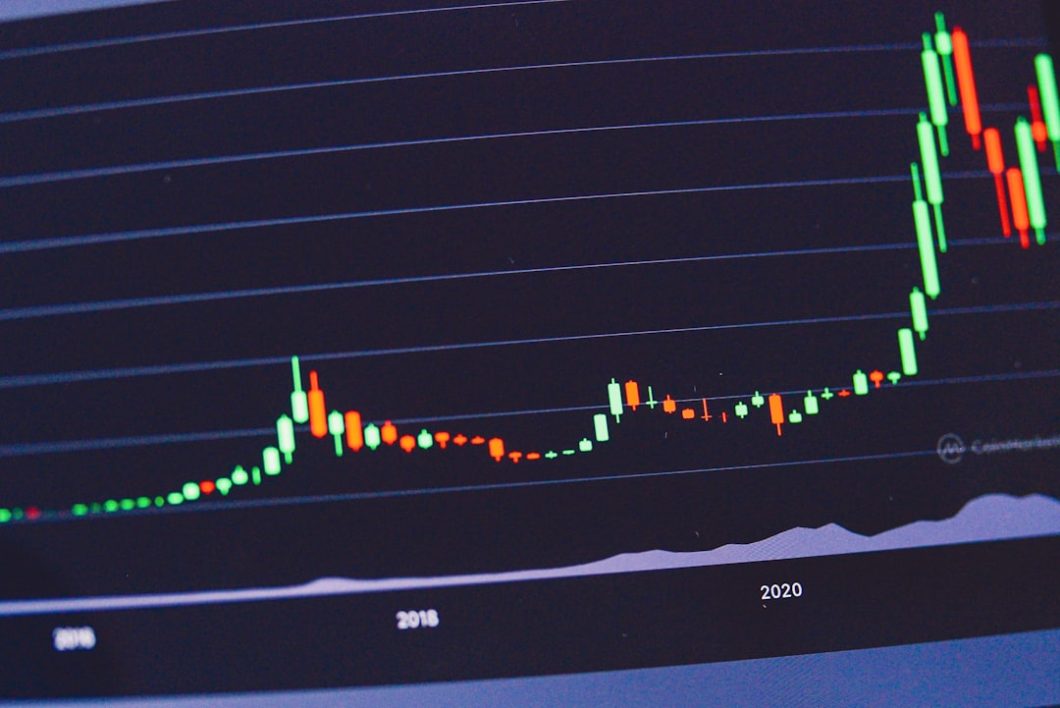
Bitcoin’s daily volatility averages 3-5%, while EUR/USD moves just 0.5-1% on most trading days. That ten-fold difference isn’t a trivial detail—it’s the single most important factor determining whether your forex risk management will survive in crypto markets. This comparison examines the actual volatility data across both asset classes, breaks down what these numbers mean for leverage and position sizing, and shows you how to adjust your trading framework when moving between currency pairs and cryptocurrency. No theoretical abstractions—just the metrics, scenarios, and risk calculations that matter when real capital is on the line.
The Volatility Gap: Bitcoin vs Major Forex Pairs by the Numbers
Bitcoin moves in a different universe than traditional forex pairs. Where EUR/USD might fluctuate 0.7% on a volatile day, Bitcoin casually swings 4% before most European traders finish their morning coffee. This isn’t hyperbole—it’s the mathematical reality that separates cryptocurrency markets from the foreign exchange world.
Daily Volatility: What Traders Experience Intraday
The numbers tell an unambiguous story. Bitcoin’s average daily volatility sits between 3-5%, meaning a trader holding a position overnight can reasonably expect price movements of several hundred dollars on a $30,000 asset. Compare that to EUR/USD’s 0.5-1% daily average, where a full percentage point move qualifies as a significant event worth analyzing in trading journals.
Intraday swings amplify this gap further. Major forex pairs like GBP/USD and USD/JPY typically experience 0.3-0.8% ranges during a single trading session, even when central bank announcements or employment data hit the wires. Bitcoin, meanwhile, routinely posts 5-10% intraday moves without any fundamental catalyst—simple order flow dynamics or liquidation cascades can trigger these swings. In 2023 alone, Bitcoin recorded 12 separate days with movements exceeding 10%. EUR/USD, GBP/USD, and USD/JPY combined? Zero days above that threshold.
Annual Volatility: The Bigger Picture
Zoom out to annual metrics and the disparity becomes even starker. Bitcoin’s annualized volatility typically ranges from 60-100%, with 2023 clocking in around 73%. EUR/USD, the world’s most liquid currency pair, registered just 7.8% annual volatility during the same period—roughly one-tenth of Bitcoin’s rate. This pattern holds across all major forex pairs, which cluster in the 7-10% annual volatility range.
For context, Bitcoin’s volatility runs 7-10x higher than the S&P 500 and 4-5x higher than gold, assets already considered volatile by forex standards. This fundamental characteristic reshapes everything from position sizing to stop-loss placement for traders crossing over from currency markets into crypto.
Volatility Index Comparison: VIX Equivalents Across Markets
Traditional market participants treat the VIX reading of 30 as a panic threshold. Bitcoin traders would consider that a quiet Tuesday. The contrast reveals fundamental differences in how these markets process uncertainty and risk.
Understanding Volatility Indices
The VIX, measuring S&P 500 implied volatility through options pricing, typically oscillates between 10 and 20 during normal market conditions. When the VIX spikes above 30, financial media declares crisis mode. Bitcoin’s equivalent volatility metrics—calculated through 30-day realized volatility or BitVol indices—routinely register 60 to 80 during turbulent periods. During the March 2020 COVID crash, the VIX briefly touched 82 while Bitcoin’s volatility index exceeded 140. For forex traders accustomed to EUR/USD’s annual volatility hovering around 7-10%, Bitcoin’s persistent 60-100% annual volatility represents a different trading universe entirely.
Major forex pairs demonstrate remarkable stability by comparison. GBP/USD might swing 0.5% on a Bank of England rate decision. Bitcoin can drop 8% because a single leveraged fund unwinds positions on a Saturday morning when forex markets are closed. This 24/7 exposure to volatility shocks creates unique risk parameters that traditional volatility indices weren’t designed to capture.
Bitcoin’s Maturation Trend
Bitcoin’s volatility profile has compressed significantly since institutional participation increased. The 30-day realized volatility that peaked near 150% during the 2017-2018 retail mania now typically ranges between 40-60%. Exchange-traded products, corporate treasury adoption, and regulated futures markets have dampened extreme price swings by an estimated 30-40% since 2020.
Yet maturation remains relative. Bitcoin experienced 12 trading days with 10%+ moves in 2023. Major forex pairs recorded zero. Even at its calmest, Bitcoin’s volatility remains five to ten times higher than EUR/USD’s typical range. For traders, this means position sizing strategies that work for a standard forex account would create catastrophic risk exposure in crypto markets without substantial adjustment.
Where Exotic Forex Pairs Fit in the Volatility Spectrum
Exotic currency pairs occupy a distinct middle territory in the volatility landscape that many traders overlook when comparing traditional forex to Bitcoin. While EUR/USD hovers around 7-10% annual volatility and Bitcoin frequently registers 60-100%, pairs like USD/TRY (Turkish lira) and USD/ZAR (South African rand) consistently deliver 15-25% annualized volatility—roughly double the major pairs but still well below cryptocurrency territory.
This positioning isn’t coincidental. Emerging market currencies share several volatility drivers with crypto assets: political uncertainty, regulatory shifts, capital flow volatility, and lower liquidity depth. When Turkey’s central bank unexpectedly cuts rates or South Africa faces political upheaval, USD/TRY can move 3-5% in a single session—closer to Bitcoin’s typical daily range than EUR/USD’s 0.5% average. The difference is that these moves stem from sovereign economic decisions rather than market sentiment alone.
The liquidity gap explains much of the remaining volatility differential. EUR/USD processes roughly $1.1 trillion in daily volume, creating a deep market that absorbs large orders without dramatic price shifts. Bitcoin’s $30-40 billion daily volume represents genuine progress toward maturity, yet still falls short by a factor of 27. Exotic pairs sit somewhere between: USD/ZAR might see $10-15 billion daily, while USD/TRY ranges $5-8 billion depending on market conditions.
For traders accustomed to major pairs but curious about higher-volatility instruments, exotics offer a stepping stone. They require wider stops and more careful position sizing than EUR/USD, but they don’t demand the psychological fortitude needed to weather Bitcoin’s occasional 10% daily swings. Understanding this spectrum helps traders calibrate their risk appetite and choose instruments that match their volatility tolerance.
Key Drivers Behind Bitcoin’s Higher Volatility
Bitcoin’s volatility isn’t accidental—it’s baked into the market’s DNA through structural factors that fundamentally differ from trillion-dollar forex markets. While EUR/USD might swing 0.5% on a typical trading day, Bitcoin routinely moves 3-5%, and understanding why matters for position sizing and risk management.
Market Structure and Trading Hours
Bitcoin trades 24/7 without weekend breaks, creating continuous price discovery that amplifies volatility rather than dampening it. When EUR/USD closes Friday afternoon in New York, liquidity drains and spreads widen, but price action pauses. Bitcoin keeps trading through Saturday and Sunday when institutional desks are offline and retail dominance peaks. This creates weekend gaps that can be brutal—a regulatory announcement on Sunday can trigger 8-12% moves before most professional traders even check their phones.
Liquidity tells the other half of the story. EUR/USD processes roughly $1.1 trillion daily across deep institutional order books. Bitcoin’s $30-40 billion daily volume sounds impressive until you realize it’s 3% of the major forex pair’s flow. Lower liquidity means:
- Single large orders can move the market 1-2% in seconds
- Bid-ask spreads widen dramatically during volatile periods
- Flash crashes of 10-15% can occur on exchange-specific liquidity crunches
- Retail traders face more slippage on market orders compared to forex execution
The participant mix matters too. Forex markets are dominated by central banks, commercial hedgers, and institutional players with long-term positions. Bitcoin remains retail-heavy, with leverage-hungry traders chasing momentum and creating feedback loops that exaggerate moves in both directions.
Event Sensitivity and News Impact
Bitcoin reacts to events with 50-100% amplified volatility compared to baseline levels. Halving cycles, regulatory announcements from major economies, and macroeconomic surprises don’t just move price—they detonate it. When the SEC approves or rejects ETF applications, Bitcoin can swing 15% intraday. Compare that to non-farm payrolls moving EUR/USD 0.8% and you see the difference. The asset’s low correlation with traditional markets (typically below 0.3) means it doesn’t benefit from the stabilizing forces that keep forex pairs anchored during routine trading sessions.
Leverage and Margin: How Brokers Adjust for Volatility Differences
Brokers aren’t offering you the same leverage on Bitcoin and EUR/USD for good reason. A 5% move in BTC/USD happens on an average Tuesday. That same 5% move in a major forex pair signals a potential currency crisis.
Leverage Limits Across Asset Classes
Regulated forex brokers in the US cap leverage at 50:1 for major pairs, while offshore brokers routinely offer 200:1 to 500:1 on EUR/USD and GBP/USD. These high ratios reflect the statistical reality that major pairs move 0.5-1% daily under normal conditions. A trader with $1,000 can control $50,000 worth of EUR/USD and survive most intraday volatility without immediate liquidation risk.
Bitcoin tells a different story. Even the most aggressive crypto exchanges cap leverage at 20:1 to 100:1, with most mainstream platforms like Coinbase and Kraken offering 2:1 to 10:1. Binance once offered 125:1 on Bitcoin futures but reduced maximum leverage to 20:1 after regulatory pressure and catastrophic user liquidations during high-volatility events. The platform learned what the data already showed: Bitcoin’s 3-5% average daily volatility makes high leverage a liquidation engine.
Margin requirements follow the same logic. Your broker might require just 2% margin (50:1 leverage) to open a standard EUR/USD position. That same broker will demand 10-50% margin for Bitcoin exposure, depending on account type and market conditions. During periods of extreme volatility, exchanges implement dynamic margin requirements, automatically raising collateral demands when Bitcoin’s 30-day realized volatility spikes above 60%.
Margin Call Scenarios: A Practical Example
Run the numbers on a leveraged position and the volatility gap becomes painfully clear. A trader with $5,000 opens a 10:1 leveraged Bitcoin position worth $50,000 at $50,000 per BTC. A 5% adverse move—roughly one standard deviation for Bitcoin on an active day—drops the position value to $47,500. The trader’s equity falls from $5,000 to $2,500, a 50% account drawdown triggering margin calls at most brokers.
Compare this to the same $5,000 controlling $250,000 in EUR/USD at 50:1 leverage (typical offshore retail offering). A 0.5% move against the position—a significant daily forex move—results in a $1,250 loss, bringing account equity to $3,750. The trader survives with 75% of capital intact and room to manage the position.
The liquidation math is unforgiving. That Bitcoin trader faces automatic position closure if price moves another 5% against them. The forex trader would need to see EUR/USD move 2% in a single session to reach the same liquidation threshold, an event that occurs perhaps once or twice per year on major pairs versus multiple times monthly for Bitcoin.
Risk-Adjusted Returns: The Sharpe Ratio Perspective
Raw volatility numbers tell only half the story. A trader looking at Bitcoin’s 73% annualized volatility versus EUR/USD’s 7.8% might dismiss crypto as reckless gambling, but that judgment ignores a critical metric: risk-adjusted returns. The Sharpe ratio—which measures excess return per unit of volatility—reveals a different picture entirely.
Throughout 2022, Bitcoin delivered a Sharpe ratio of approximately 1.2 despite its wild swings, while major forex pairs like EUR/USD, GBP/USD, and USD/JPY averaged just 0.4. This means Bitcoin traders who managed their risk properly earned three times more return for each unit of volatility they absorbed. The difference matters because higher volatility doesn’t automatically translate to worse trading opportunities—it simply demands more sophisticated position sizing and stop-loss discipline.
Risk-adjusted metrics level the playing field when comparing assets with vastly different volatility profiles. A 5% daily move in Bitcoin might seem chaotic compared to EUR/USD’s 0.7% average, but if that Bitcoin move generates proportionally larger returns relative to its risk, skilled traders can capitalize on those swings with appropriate leverage adjustments. A forex trader using 50:1 leverage on a currency pair with 0.5% daily volatility faces similar actual risk exposure as a crypto trader using 5:1 leverage on Bitcoin’s 5% daily moves.
The key insight: volatility creates opportunity, not danger. The danger comes from applying forex-style risk management to crypto markets or vice versa. Trading Bitcoin with the same position sizes and mental models designed for EUR/USD is where traders blow up accounts, not because Bitcoin is inherently worse, but because the risk framework doesn’t match the asset’s behavior.
Practical Trading Implications: Position Sizing and Risk Management
A trader risking 2% of a $10,000 account on EUR/USD might allocate $200 to the trade with a 50-pip stop loss. Apply that same approach to Bitcoin without adjustment, and a single 5% adverse move wipes out your entire risk allocation in minutes. The stark volatility differential between Bitcoin and major forex pairs demands fundamentally different position sizing mathematics.
Adjusting Position Sizes for Volatility
The core principle: inverse your position size to volatility. When Bitcoin exhibits 3-5% daily swings compared to EUR/USD’s 0.5-1%, your position size should shrink proportionally. Here’s how traders recalibrate:
- Calculate volatility-adjusted risk units: If EUR/USD trades with 0.8% daily volatility and you normally risk 2% per trade, reduce Bitcoin positions to 0.3-0.5% when its daily volatility hits 4%. The ratio is roughly 5:1 based on typical volatility spreads.
- Use dollar-based position sizing: Instead of percentage-based leverage, determine fixed dollar risk amounts. A $200 risk on EUR/USD with a 40-pip stop might translate to just $50 risk on Bitcoin with a 3% stop level, maintaining equivalent probability of stop-out relative to normal price action.
- Apply the ATR multiplier method: Calculate the 14-day Average True Range for both assets. If Bitcoin’s ATR is $1,200 and EUR/USD’s is 80 pips (roughly $8 per micro lot), scale position sizes inversely—approximately 150 times smaller for Bitcoin per equivalent dollar exposure.
Stop-Loss and Take-Profit Strategies
Bitcoin’s intraday swings of 5-10% require stop losses that seem uncomfortably wide to forex traders accustomed to 20-40 pip stops. A 2% stop on a Bitcoin position at $45,000 means absorbing a $900 move—normal noise for the asset but catastrophic if you’re sizing like GBP/USD.
For major pairs, technical stops at support/resistance levels typically sit 30-60 pips away. Bitcoin demands 3-5% breathing room minimum. Day traders working EUR/USD might use 15-pip stops profitably; the same timeframe on Bitcoin requires $600-1,000 stops at current prices. The alternative? Trade smaller timeframes with proportionally reduced position sizes, accepting that Bitcoin’s volatility makes sub-1% stops nearly worthless.
Take-profit levels follow similar logic. A 1.5:1 risk-reward ratio on EUR/USD might target 60 pips against a 40-pip stop. Bitcoin traders often need 3:1 or 4:1 ratios to compensate for the violent whipsaws that trigger wider stops more frequently.
Portfolio Allocation Guidelines
Volatility concentration creates asymmetric portfolio risk. Bitcoin’s 60-100% annual volatility means a 10% portfolio allocation contributes disproportionate variance to overall returns. Professional traders typically cap Bitcoin exposure at 2-5% of trading capital, while major forex pairs might collectively represent 40-60%.
The diversification math works differently too. Bitcoin’s historically low correlation with EUR/USD (often below 0.15) suggests pairing benefits, but correlation spikes to 0.6+ during systemic market stress—exactly when you need diversification most. Experienced traders maintain separate volatility budgets: perhaps 1% daily portfolio volatility from forex positions and another 0.5% from crypto, never combining the risk calculations.
Time horizon amplifies these considerations. Day traders face Bitcoin’s full intraday volatility but can exit before overnight gaps compound risk. Swing traders holding positions through weekends absorb Bitcoin’s notorious Saturday-Sunday volatility spikes while forex markets sleep, demanding even smaller position sizes or protective options strategies.
Bitcoin’s 3-5% daily volatility versus forex’s 0.5-1% isn’t just a statistical curiosity—it defines two fundamentally different trading environments that demand distinct risk frameworks. Neither market is inherently superior. EUR/USD’s stability allows higher leverage and tighter stops; Bitcoin’s volatility creates larger profit opportunities for traders who size positions correctly and accept wider price swings. The maturation trend is real—Bitcoin’s volatility has compressed 30-40% since 2020—but even the calmest crypto conditions remain five to ten times more volatile than major currency pairs. Your trading edge comes from matching your leverage, position sizing, and stop-loss parameters to each asset’s actual volatility profile. Treat Bitcoin and forex as complementary opportunities rather than competing choices. Master the risk mathematics for both, maintain separate volatility budgets, and you’ll access a broader range of trading setups across market conditions that favor either stability or movement.