

Forex trading is often misunderstood. To some, it’s a quick way to make money. To professionals, it’s a structured discipline built on probability, risk management, and execution. The difference between these two perspectives is exactly what separates profitable traders from those who consistently lose.
In modern trading, understanding the mechanics of platforms is just as important as understanding the market itself. For example, traders who explore how Pocketoption works begin to realize that execution speed, interface simplicity, and trade structure can significantly influence results—especially in fast-paced environments.
This article goes far beyond basics. We will break down Forex trading as a professional system: how the market truly moves, what strategies survive long-term, how psychology destroys accounts, and how to build a structure that actually works.
What Forex Trading Really Is
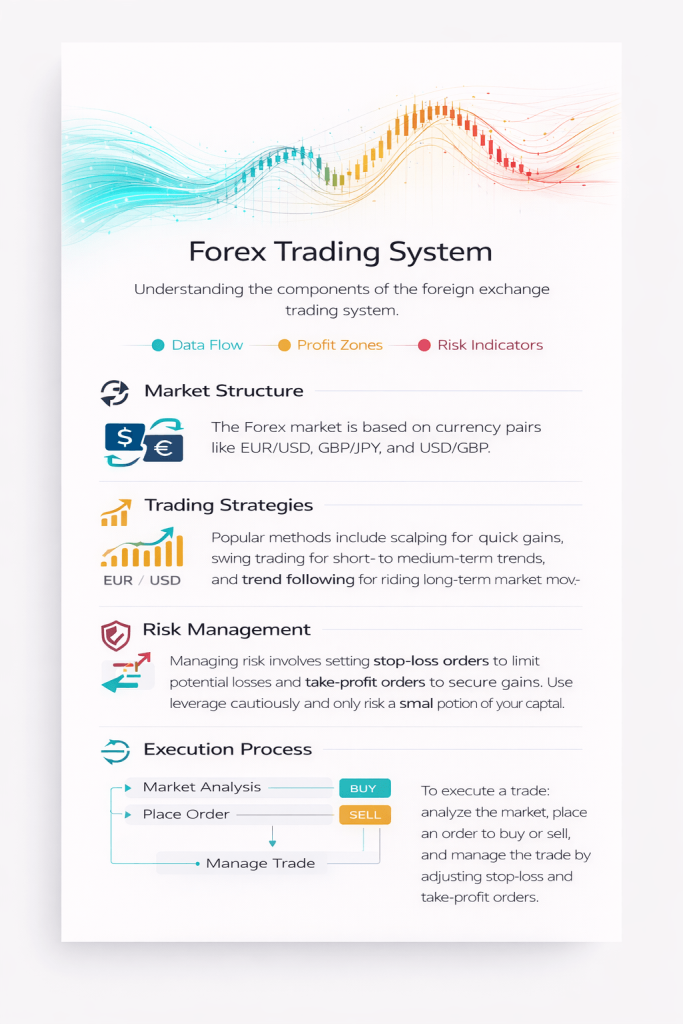
At its core, Forex trading is the exchange of currencies. But in reality, it’s a global system of liquidity flows driven by institutions, macroeconomics, and speculation.
Key Concept
- You are not trading money — you are trading relative strength between economies
When you buy EUR/USD, you are betting that the euro will outperform the US dollar—not that it will simply “go up.”
How the Forex Market Actually Moves
Retail traders often think price moves randomly or based on indicators. In reality, price is driven by liquidity.
Main Drivers
- Central bank policies (interest rates)
- Institutional order flow
- Economic data releases
- Market sentiment
Understanding this shifts your mindset from guessing to analyzing.
Major Currency Pairs and Their Behavior
| Pair | Personality | Best Strategy |
|---|---|---|
| EUR/USD | Stable, structured | Trend / breakout |
| GBP/USD | Volatile | Breakout / scalping |
| USD/JPY | Interest-rate driven | Trend following |
| AUD/USD | Commodity-linked | Swing trading |
Professional traders often specialize in 1–2 pairs instead of chasing everything.
Trading Sessions and Timing Edge
Timing is not optional—it’s an edge.
| Session | Behavior | Opportunity |
|---|---|---|
| Asian | Range-bound | Scalping |
| London | Explosive moves | Breakouts |
| New York | Trend continuation | Momentum trades |
Most professional trades happen during London or New York overlap.
Technical Analysis: What Actually Works
Indicators don’t move the market—price does.
Core Concepts That Matter
- Support and resistance zones
- Market structure (higher highs / lower lows)
- Liquidity zones
- Breakouts and fakeouts
If your system relies only on indicators, you are reacting—not anticipating.
Fundamental Analysis: The Bigger Picture
Fundamentals explain why trends exist.
- Interest rate hikes → stronger currency
- Economic growth → capital inflow
- Political instability → currency weakness
Ignoring fundamentals is like driving without knowing the road conditions.
Trading Strategies That Survive Long-Term
1. Trend Following
- Trade with the direction
- Avoid predicting reversals
2. Breakout Strategy
- Enter when price escapes a range
- Requires discipline to avoid fakeouts
3. Liquidity Trading
- Focus on stop hunts and reversals
- Used by advanced traders
4. Short-Term Execution Models
- Fast trades
- Precision timing
- High psychological pressure
| Strategy | Timeframe | Stress Level |
|---|---|---|
| Scalping | Minutes | High |
| Day Trading | Hours | Medium |
| Swing | Days | Low |
Risk Management: Where Most Traders Fail
No strategy survives without risk control.
Professional Rules
- Risk 1–2% per trade
- Never trade without stop-loss
- Avoid overleveraging
One mistake should never destroy your account.
Example of Risk vs Reward
| Risk | Reward | Win Rate Needed |
|---|---|---|
| 1% | 2% | ~40% |
| 1% | 1% | ~50% |
| 2% | 1% | ~67% |
Risk-reward defines your long-term survival.
How Pocket Option Fits Into Forex Trading
Platforms are not just tools—they define execution conditions.
Pocket Option is often used in fast-execution environments where:
- Trade duration is short
- Decisions must be precise
- Execution speed matters
Understanding how such platforms work helps traders adapt strategies accordingly.
Psychology: The Real Battlefield
The biggest losses don’t come from the market—they come from emotions.
Main Psychological Traps
- FOMO (entering too late)
- Revenge trading
- Overconfidence after wins
- Fear after losses
A profitable system can still fail if psychology is not controlled.
Common Mistakes Beginners Make
- Trading without a plan
- Changing strategies constantly
- Overtrading
- Ignoring risk management
Avoiding mistakes is often more important than finding the “perfect entry.”
Building a Professional Trading System
A real system includes more than signals.
Core Components
- Entry rules
- Exit rules
- Risk parameters
- Performance tracking
Without structure, trading becomes gambling.
Forex vs Other Markets
| Market | Liquidity | Speed | Volatility |
|---|---|---|---|
| Forex | Very high | High | Moderate |
| Crypto | High | Very high | Extreme |
| Stocks | High | Medium | Variable |
The Truth About Profitability
Most traders focus on making money quickly. Professionals focus on not losing money.
- Consistency beats intensity
- Process beats outcome
- Discipline beats intelligence
The difference is mindset.
Conclusion: Forex as a Professional Discipline
Forex trading is not about predicting the market—it’s about managing uncertainty with precision.
The traders who succeed:
- Control risk
- Follow structured systems
- Understand execution environments
Because in the end, trading is not about winning every trade.
It’s about surviving long enough for your edge to compound.
Frequently Asked Questions (FAQ)
What is Forex trading in simple terms?
Forex trading is the process of buying one currency and selling another to profit from changes in exchange rates. It is the largest financial market in the world.
How does Forex trading actually work?
Forex works through currency pairs. Traders speculate whether one currency will strengthen or weaken against another based on economic data, market sentiment, and technical analysis.
Is Forex trading profitable?
Forex trading can be profitable, but most beginners lose money due to poor risk management and emotional decisions. Long-term profitability requires discipline and a structured strategy.
How Pocket Option works in Forex trading?
Pocket Option provides a trading interface where users can execute short-term trades based on price movements. The platform focuses on fast execution and simplified trading mechanics.
How much money do I need to start Forex trading?
You can start with a small amount such as $50–$100, but for proper risk management and consistency, many traders prefer starting with at least $500–$1,000.
What is the safest Forex trading strategy?
No strategy is completely safe, but trend-following and risk-controlled strategies are generally considered more stable than high-frequency or aggressive approaches.
Why do most Forex traders lose money?
Most traders lose money due to overtrading, lack of discipline, ignoring risk management, and reacting emotionally instead of following a structured plan.
What is the most important skill in Forex trading?
The most important skill is risk management. Protecting your capital ensures long-term survival and gives your strategy time to work.
Can I trade Forex without experience?
Yes, but it is highly recommended to start with a demo account, learn basic concepts, and practice strategies before trading with real money.