
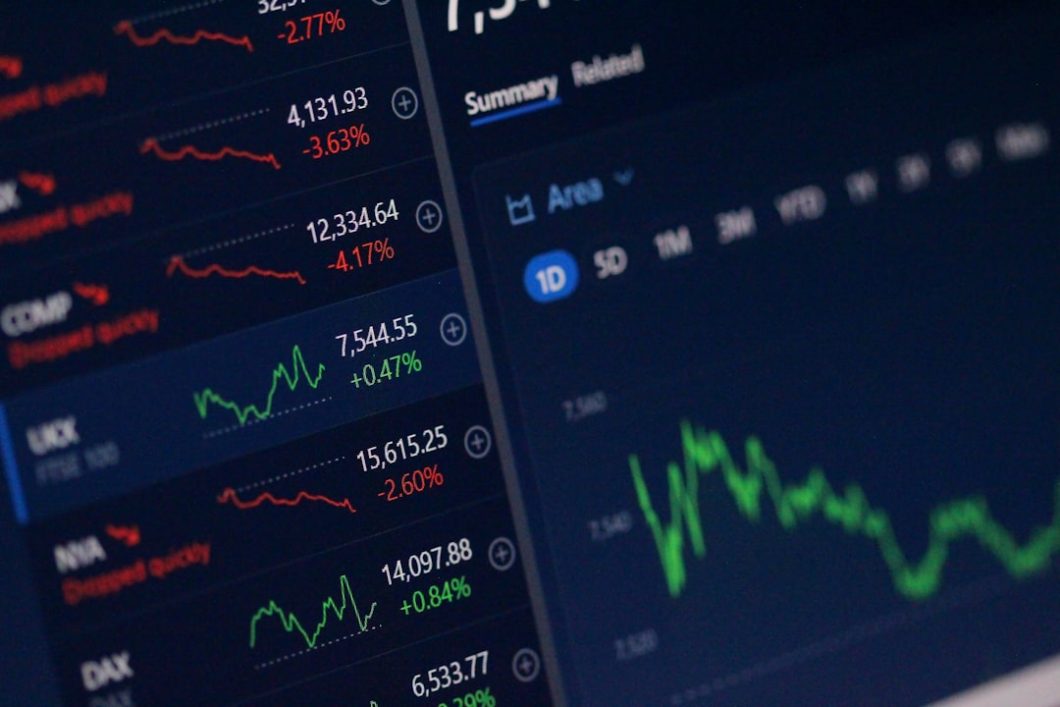
At 8:30 AM EST on a Friday morning, a retail trader watches EUR/USD sitting at 1.0850, their 50-pip stop-loss comfortably below at 1.0800. Then Non-Farm Payroll data hits: 263,000 jobs versus the expected 185,000. Within 90 seconds, the pair surges to 1.0970—a 120-pip spike. The trader’s stop triggers, but instead of executing at 1.0800, they’re filled at 1.0782 due to slippage. What should have been a $500 loss becomes $680, and the violent whipsaw reversal 10 minutes later adds insult to injury. This isn’t bad luck—it’s the predictable reality of news-driven volatility. Economic releases aren’t background noise for currency and crypto markets; they’re the primary catalyst for sudden, violent price movements that can make or break trading accounts. Understanding the mechanics behind these spikes, why certain announcements trigger chaos while others barely register, and how to navigate (or avoid) these high-risk windows separates surviving traders from those who learn expensive lessons.
The Mechanics of News-Driven Volatility: From Release to Price Spike
When the US Bureau of Labor Statistics releases Non-Farm Payroll data at 8:30 AM EST, EUR/USD can swing 100 pips in under five minutes. This isn’t random chaos—it’s a predictable sequence of market mechanics that begins long before the actual announcement hits trading screens.
The Expectation vs. Reality Gap
Markets don’t react to economic data in isolation. They react to the difference between what was expected and what actually happened. Consensus forecasts get priced into currency pairs and crypto assets days or weeks in advance. When NFP expectations hover around 180,000 new jobs, traders have already positioned accordingly. The actual volatility trigger occurs when reality deviates by 0.3% or more from these baked-in assumptions. A print of 250,000 jobs versus the expected 180,000 creates an immediate repricing event because thousands of positions are suddenly on the wrong side of the trade.
This surprise element explains why modest economic improvements can trigger violent price spikes while genuinely strong data sometimes produces muted responses. If CPI comes in at 3.2% when markets expected 3.1%, the reaction will be far less dramatic than if it prints at 3.6%. The first 15 minutes following major releases typically account for 60-70% of the day’s total volatility in affected pairs, with most of that movement concentrated in the first three to five minutes.
Algorithmic Amplification of Initial Moves
High-frequency trading algorithms now dominate the immediate post-release landscape, accounting for 50-70% of trading volume in major currency pairs. These systems parse headline numbers in microseconds, executing thousands of orders before human traders finish reading the release. When NFP beats expectations, algorithms don’t gradually adjust positions—they fire massive buy or sell programs that create the characteristic vertical price spikes visible on one-minute charts.
This algorithmic front-running amplifies initial movements well beyond what fundamental analysis would justify. A modest surprise gets magnified into a 50-pip spike as HFT systems trigger stop-losses, activate momentum algorithms, and exploit liquidity gaps. Human traders enter a market already moved, often chasing price 30-40 pips from the pre-release level. Cryptocurrency markets experience even sharper reactions—Bitcoin can move 5-8% within minutes of unexpected Federal Reserve commentary, roughly three to five times the proportional movement seen in EUR/USD, due to thinner liquidity and continuous 24/7 trading cycles that prevent volatility from dissipating overnight.
Tier 1 Economic Events: The Volatility Heavyweights
When the US Non-Farm Payroll number hits at 8:30 AM EST, EUR/USD typically moves 80-120 pips within 30 minutes. That’s not a forecast—it’s the measured reality of Tier 1 economic events, the releases that separate casual market watchers from serious traders who understand when liquidity evaporates and price discovery becomes violent.
Tier 1 events don’t just move markets—they reshape them temporarily. Federal Reserve interest rate decisions, Consumer Price Index releases, and major employment data create volatility increases of 150-300% compared to normal trading conditions. By contrast, Tier 3 events like housing starts or consumer confidence might generate 20-50% bumps that fade within an hour. The difference matters because your stop-loss placement, position sizing, and broker’s spread behavior change dramatically during these windows.
| Event Type | Typical EUR/USD Movement | Volatility Increase | Pre-Event Pattern |
|---|---|---|---|
| Non-Farm Payroll | 80-120 pips (30 min) | 200-300% | Tight range, falling volume |
| Fed Rate Decision | 100-180 pips (1 hour) | 250-350% | 30-40% lower volatility |
| CPI Announcement | 70-110 pips (30 min) | 150-250% | Spread widening starts 10 min before |
| ECB Press Conference | 90-140 pips (2 hours) | 180-280% | Asymmetric—spikes on guidance shift |
Central banks create asymmetric volatility patterns that algorithmic traders exploit ruthlessly. Pre-announcement volatility typically drops 30-40% below average as market makers pull liquidity and retail traders freeze. Then the announcement hits. High-frequency algorithms process the data in microseconds, accounting for 50-70% of initial order flow and amplifying moves before human traders finish reading the headline.
NFP and Employment Data
Non-Farm Payroll releases represent the single most violent monthly event in forex markets. A surprise deviation of 100,000 jobs from consensus can trigger 150-pip swings in USD pairs within five minutes. The initial spike often reverses partially as algorithms fade the extreme, creating a whipsaw pattern that stops out both directions before the true directional move emerges 20-40 minutes post-release.
Crypto markets amplify this volatility 3-5 times due to thinner liquidity and 24/7 accessibility. Bitcoin regularly moves 4-8% on major NFP surprises as macro traders treat it as a risk-on/risk-off proxy. The March 2020 NFP release saw Bitcoin drop 30% in a single session—traditional forex volatility on steroids.
Central Bank Rate Decisions and Forward Guidance
Rate decisions themselves often cause less chaos than the forward guidance that follows. Markets price in expected rate changes weeks ahead through derivatives. The real volatility comes from language shifts in policy statements or press conference comments that signal future trajectory changes. When Jerome Powell pivoted from “transitory inflation” language in late 2021, EUR/USD moved 220 pips over two hours—not from the rate decision, but from revised expectations for the next six meetings.
ECB announcements create unique patterns because Christine Lagarde’s press conferences can extend volatility for 90-120 minutes after the initial statement, unlike the Fed’s more predictable structure. Traders positioning for a quick in-and-out often find themselves managing exposure through multiple volatility waves.
Crypto Markets vs. Forex: Volatility on Steroids
When the Federal Reserve announced emergency rate cuts in March 2020, EUR/USD jumped roughly 200 pips over several hours. Bitcoin, during that same week, swung 30% in a single day before plunging another 50% within 48 hours. That divergence illustrates the fundamental difference between crypto and forex volatility—crypto doesn’t just react to macroeconomic news, it explodes.
Why Crypto Reacts More Violently
Cryptocurrency markets consistently demonstrate 3-5 times higher volatility responses to macro news compared to traditional forex pairs. The primary culprit is liquidity—or the lack of it. Major forex pairs like EUR/USD trade tens of billions daily across deep institutional order books. Bitcoin and Ethereum, despite their market caps, operate with fragmented liquidity across dozens of exchanges, many with shallow order books. When a hawkish Fed announcement hits, forex market makers absorb shocks across centralized interbank networks. Crypto exchanges, fragmented and often undercapitalized, see cascading liquidations as leveraged positions unwind without coordinated circuit breakers.
Algorithmic trading amplifies this asymmetry. High-frequency traders dominate 50-70% of forex volume, but their stabilizing presence is weaker in crypto markets where arbitrage bots often exacerbate cross-exchange price dislocations rather than smoothing them. During major news events, the result is violent whipsaws—Bitcoin’s 400% volatility spike during the COVID crash wasn’t an anomaly, it was structural.
The 24/7 Risk Window
Forex traders get weekends off. Crypto traders don’t. When unexpected geopolitical news breaks at 2 AM Sunday, forex positions sit frozen until Monday’s open. Bitcoin reacts immediately, often violently, with no circuit breakers or market close to contain damage. This continuous exposure means crypto traders face overnight gap risk every single night, not just over weekends. A surprise inflation report leaked at midnight can trigger 10-15% moves in Bitcoin before most retail traders wake up, while forex pairs wait patiently for London open to digest the same information in a more orderly fashion.
Flash Crashes and Extreme Volatility Events
On May 6, 2010, at 2:32 PM Eastern Time, the Dow Jones Industrial Average began a descent that would become the most dramatic intraday point decline in stock market history. Within five minutes, the index had shed nearly 1,000 points—erasing $1 trillion in market value before recovering most losses by the close. The culprit wasn’t breaking news or a geopolitical crisis. It was an algorithmic cascade triggered by a single large sell order that overwhelmed liquidity, creating a feedback loop where high-frequency trading systems pulled quotes and exacerbated the collapse.
For currency traders, Brexit delivered an equally brutal lesson on June 24, 2016. When overnight vote tallies defied polling predictions, GBP/USD plunged more than 10% in a single session—the largest one-day drop in the pound’s modern history. The pair fell from 1.50 to below 1.33 in Asian trading hours, where thin liquidity turned an already shocking result into a rout. Retail traders holding long sterling positions without stop-losses faced margin calls at breakfast. Some brokers widened spreads to 50 pips or more, while others temporarily suspended trading altogether.
These extreme events expose the structural vulnerabilities that news-driven volatility can exploit. Algorithmic trading systems, which now account for 50-70% of volume in major markets, operate on microsecond reaction times and risk parameters that can trigger mass exits during anomalous price action. When liquidity providers step aside—exactly when traders need them most—even small orders move prices violently. The VIX, Wall Street’s fear gauge, routinely spikes 20-40% immediately following unexpected policy announcements, reflecting the sudden repricing of tail risk across asset classes.
Cryptocurrency markets magnify these dynamics. Bitcoin’s March 2020 crash saw 30% intraday swings as pandemic uncertainty collided with exchange liquidity crises and cascading liquidations on leveraged platforms. The 24/7 nature of crypto trading means gaps open without warning, and circuit breakers don’t exist to pause the carnage. Understanding these historical precedents isn’t academic—it’s survival training for managing position size when the next black swan appears on your screen.
The Hidden Costs: Liquidity Evaporation and Slippage
When the Non-Farm Payroll report drops, a trader’s EUR/USD spread can balloon from 0.8 pips to 4 pips in seconds. That’s a 400% increase in trading costs happening faster than most retail platforms can display updated quotes. This spread explosion isn’t just an inconvenience—it represents liquidity vanishing from the market exactly when traders need it most.
Why Market Makers Pull Liquidity
Market makers profit from the bid-ask spread under normal conditions, but major news releases flip their risk-reward calculation. When the Federal Reserve announces an unexpected rate decision, even sophisticated algorithms can’t immediately price in the implications. Rather than quote prices they might instantly regret, market makers withdraw their orders. Institutional liquidity providers pull back simultaneously, creating a vacuum. ECN brokers who typically offer tight spreads suddenly display quotes 200-500% wider than normal, while dealing desk brokers may simply pause execution altogether for 10-30 seconds during peak volatility.
Slippage Math: What 5 Pips Can Cost You
A standard lot trader entering a EUR/USD position during a CPI announcement might expect a 1-pip spread but execute at 6 pips worse than the displayed price. On a $100,000 position, that’s $50 in unexpected costs per trade. Stop-loss orders suffer worse. A protective stop placed 20 pips below entry during calm conditions might execute 35 pips away during a news spike—a 75% deviation from the intended risk. Retail traders face asymmetric disadvantages here: high-frequency trading algorithms execute in microseconds, while retail orders queue behind institutional flow. During the March 2020 volatility surge, some Bitcoin traders reported slippage exceeding 2% on market orders—turning a calculated $200 risk into a $600 realized loss.
The Speed Factor: Social Media and Algorithmic News Reading
When the U.S. Consumer Price Index dropped on February 13, 2024, EUR/USD moved 45 pips in the first 8 seconds. Retail traders watching Bloomberg or refreshing their broker’s economic calendar were already too late. Institutional algorithms had parsed the headline figure, cross-referenced it against consensus forecasts, and executed positions before most humans registered what happened.
This speed compression represents the single biggest shift in how news impacts markets over the past decade. In 2010, a trader with a live newswire feed and fast reflexes had 30-60 seconds to react before major price moves exhausted themselves. By 2024, that window has collapsed to microseconds for the initial spike and perhaps 2-3 seconds before algorithms establish the primary directional bias. High-frequency trading systems now monitor Twitter/X feeds, parse Federal Reserve statements using natural language processing, and execute trades faster than a retail trader can move their mouse to the “Buy” button.
The technology gap is insurmountable on speed alone. Institutional algorithms operate with co-located servers positioned within feet of exchange matching engines, achieving latency measured in microseconds. They scan thousands of news sources simultaneously, extract sentiment from central banker tweets in real-time, and adjust positions before traditional news terminals display the headline. When Jerome Powell tweets or a surprise GDP revision hits the wires, retail traders face a market that has already moved and repriced.
This doesn’t mean retail traders can’t profit from news events, but it demands a complete strategy overhaul. Competing on reaction speed is financial suicide. Instead, successful retail approaches focus on anticipating second-order effects, trading the retracement after algorithmic overreaction, or positioning ahead of scheduled events with defined risk parameters. Understanding that you’re always trading after the machines have moved is the first step toward realistic risk management in the modern news-driven environment.
Practical Risk Management Strategies for News Volatility
Trading through major economic releases without a clear plan is how retail traders drain accounts in minutes. EUR/USD can swing 100+ pips during Non-Farm Payrolls, and Bitcoin regularly moves 5-10% during Federal Reserve rate decisions. Protecting capital requires specific tactics tailored to news volatility, not generic risk rules.
Pre-News Positioning Tactics
The safest approach for inexperienced traders is staying completely flat during Tier 1 events. Close all positions 30 minutes before FOMC announcements, NFP releases, or CPI data. Algorithmic traders dominate these initial moves, executing within microseconds while retail platforms experience slippage and requotes. Missing one volatile event costs nothing. Getting caught on the wrong side can wipe out weeks of gains.
For traders determined to maintain exposure through announcements, restructure positions with these parameters:
- Widen stop-losses by 150-200% of normal range to account for erratic price spikes that don’t reflect true directional moves
- Reduce position size by 50-70% so the wider stop represents the same dollar risk as your standard trade
- Avoid placing stops at round numbers like 1.1000 on EUR/USD where liquidity hunts intensify during volatile conditions
- Check your broker type before news events — ECN brokers provide direct market access with transparent execution, while market makers may widen spreads from 2 pips to 20+ pips during major releases, triggering stops that wouldn’t hit on ECN platforms
Post-News Entry Strategies
The highest probability setups emerge 15-45 minutes after releases when algorithms complete their initial reactions and directional bias clarifies. Wait for a consolidation range to form, then trade the breakout with confirmation. After a hawkish Fed announcement, GBP/USD might spike 80 pips, consolidate for 20 minutes in a 30-pip range, then continue another 60 pips in the same direction.
Use economic calendars like Forex Factory or Investing.com to plan your entire trading week. Mark Tier 1 events in red, schedule trading sessions around them, and know exactly when to reduce leverage or step aside. Cryptocurrency traders face additional complexity since Bitcoin and Ethereum react to traditional market news 24/7 without forex market closures providing natural breaks.
Economic news volatility isn’t random chaos—it follows predictable patterns driven by expectation gaps, algorithmic amplification, and liquidity dynamics. The 120-pip EUR/USD spike during NFP releases, the 5-8% Bitcoin swings on Fed commentary, the spread widening and slippage that turns a 20-pip stop into a 35-pip loss—these aren’t anomalies. They’re the structural reality of modern markets where high-frequency algorithms execute in microseconds and retail traders operate at a permanent speed disadvantage.
But retail traders can’t compete on speed, and they don’t need to. They can compete on preparation and discipline. The traders who survive news volatility are those who respect its power rather than try to outsmart it. They mark economic calendars weeks in advance, reduce position sizes before Tier 1 events, widen stops to account for realistic slippage, and understand that their broker’s quoted stop-loss price is a suggestion, not a guarantee, when NFP or CPI data hits.
Treat major economic releases as known risk events. Mark your calendar. Adjust position sizing accordingly. Never assume your stop-loss will execute at the quoted price during Tier 1 events. The difference between a trader who blows up their account on a single NFP release and one who compounds gains over years often comes down to a simple choice: respecting the 8:30 AM EST window enough to either step aside or trade it with appropriate risk parameters. News volatility will always exist. Your exposure to it is entirely within your control.